
$100–$220: First Aid Course Cost in Australia, by HLTAID Unit

Most accredited first aid and CPR courses in Australia cost within a moderate price range, depending on the unit and delivery format. HLTAID011 (Provide First Aid) is the unit most workplaces require, typically priced around $120 or more for a one-day, face-to-face course, while HLTAID009 (CPR only) is usually less expensive. Prices shift with location, group size, and whether training happens on-site or online.
TL;DR:
First aid course prices mainly range from $100 to $220, with full-day face-to-face training costing more than online or blended options, depending on location and group size.
Genuine courses include practical assessments, certification, learning materials, and USI recording, and discounts are available for students, pensioners, online bookings, and group enrollments.
Employers should verify the specific unit code required, ensure the provider is registered, and confirm assessment includes practical CPR to avoid invalid or non-recognized certificates.
Lower-cost online-only courses lacking practical assessment do not meet compliance standards and could be invalid for workplace requirements.
Remote-site bookings often incur travel surcharges, and checking provider registration and assessment details can prevent costly mistakes or invalid certificates.
Table of Contents
What does a first aid course cost, and what’s included?
A legitimate first aid training cost covers more than a few hours in a room. It includes the trainer’s time, assessment, your certificate, learning materials, and the administrative work of recording your result against your Unique Student Identifier. Skip any of those and you’re not getting a nationally recognised outcome, whatever the invoice says.
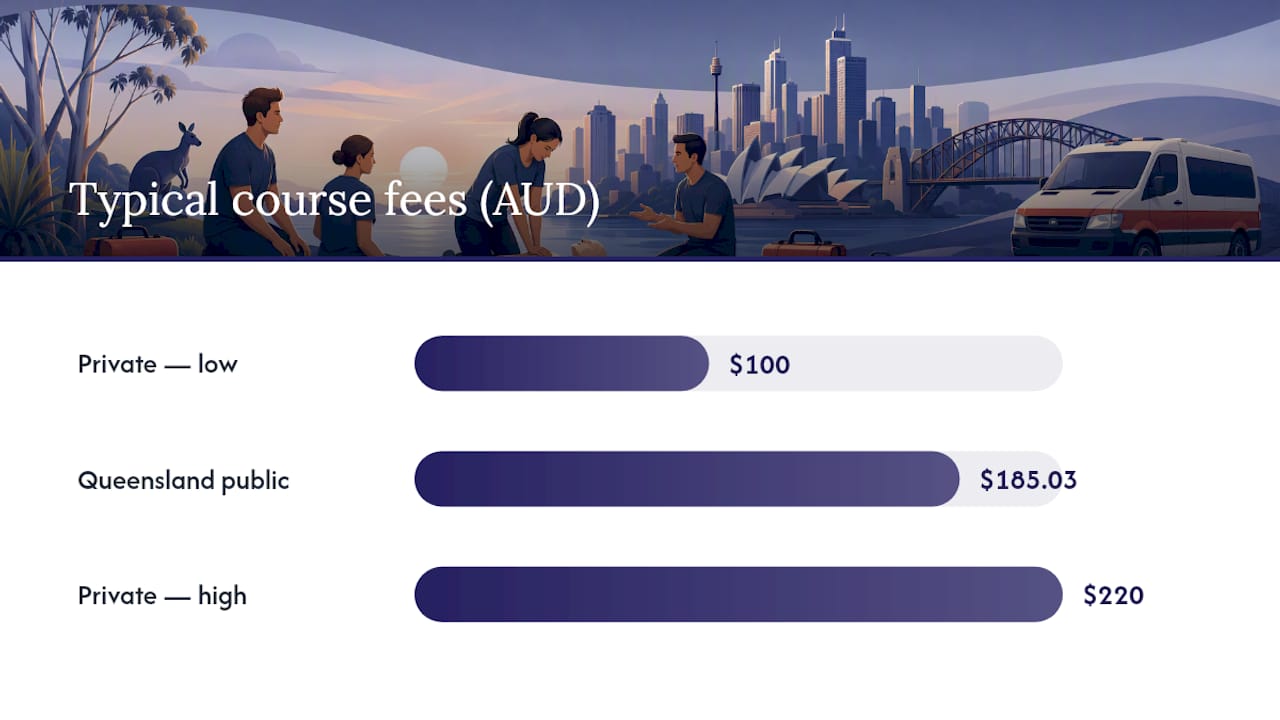
Public course fees vary by provider and state, but government-run schedules give a useful anchor point. Queensland’s public Provide First Aid (HLTAID011) course, for example, lists a full fee of $185.03 for the 2025–2026 financial year, with a 5% discount for students and pensioners and a 10% discount for online bookings. That figure isn’t the only price you’ll see nationally. Private RTOs price the same unit anywhere from around $100 to $220 depending on region, format, and how many people book together, but the Queensland schedule shows what a subsidised, publicly run course looks like against private market rates.
A genuine course fee for HLTAID011 or HLTAID009 usually includes:
The trainer-led session (face-to-face, blended, or online theory component)
Practical assessment against the nationally recognised unit
A certificate on completion, valid for the standard three-year period
Course materials, including manikins and consumables for CPR practice
Recording of your result against your USI, which every RTO is required to do for nationally recognised training
Cheap listings that undercut the market by a wide margin are worth a second look. If a provider isn’t listed on training.gov.au as a Registered Training Organisation, if the “certificate” isn’t tied to a real unit code, or if there’s no mention of practical assessment, you may end up with a document that won’t satisfy an employer, a childcare regulator, or a workplace auditor. A $60 online-only course that promises a certificate with no assessment component isn’t a shortcut. It’s a different product altogether.
Price by course code: HLTAID011, HLTAID009, HLTAID012 and HLTAID013
Course cost tracks fairly closely with unit code, because each code carries a different nominal duration and a different scope of content. Here’s how the four most commonly booked units in Australia stack up.
HLTAID009 (Provide Cardiopulmonary Resuscitation) — This is the shortest and cheapest unit, usually delivered in three to four hours face-to-face. Expect somewhere in the low double figures to low triple figures for a standalone CPR course, with blended delivery (online theory plus a shorter in-person practical session) sometimes pricing slightly lower.
HLTAID011 (Provide First Aid) — The standard workplace unit, and the one most employers ask for by name. Full-day, face-to-face delivery (typically seven to eight hours) sits at the higher end of the price band. Some providers run a compressed five-hour “express” version for people who’ve held a current certificate before, priced a little cheaper than the full-day option, though the assessment standard doesn’t change. This is the unit most workers need for general compliance.
HLTAID012 (Provide First Aid in an Education and Care Setting) — Built for childcare workers and educators, this unit adds content on asthma, anaphylaxis, and infant/child-specific first aid on top of the standard curriculum. That extra content means longer contact hours and a higher fee than HLTAID011, reflecting the regulatory requirements early childhood settings must meet.
HLTAID013 (Provide First Aid in Remote or Isolated Sites) — The most expensive of the four, and for good reason. It covers extended patient management, evacuation considerations, and scenarios specific to remote or isolated work, plus the added cost of getting a trainer to site if you’re not near a metro centre.
Pro Tip: If you’re not sure which code you need, check the job requirement first. Most general workplace roles ask for HLTAID011. Childcare and education roles specifically require HLTAID012. Don’t assume they’re interchangeable.
What actually drives the price difference
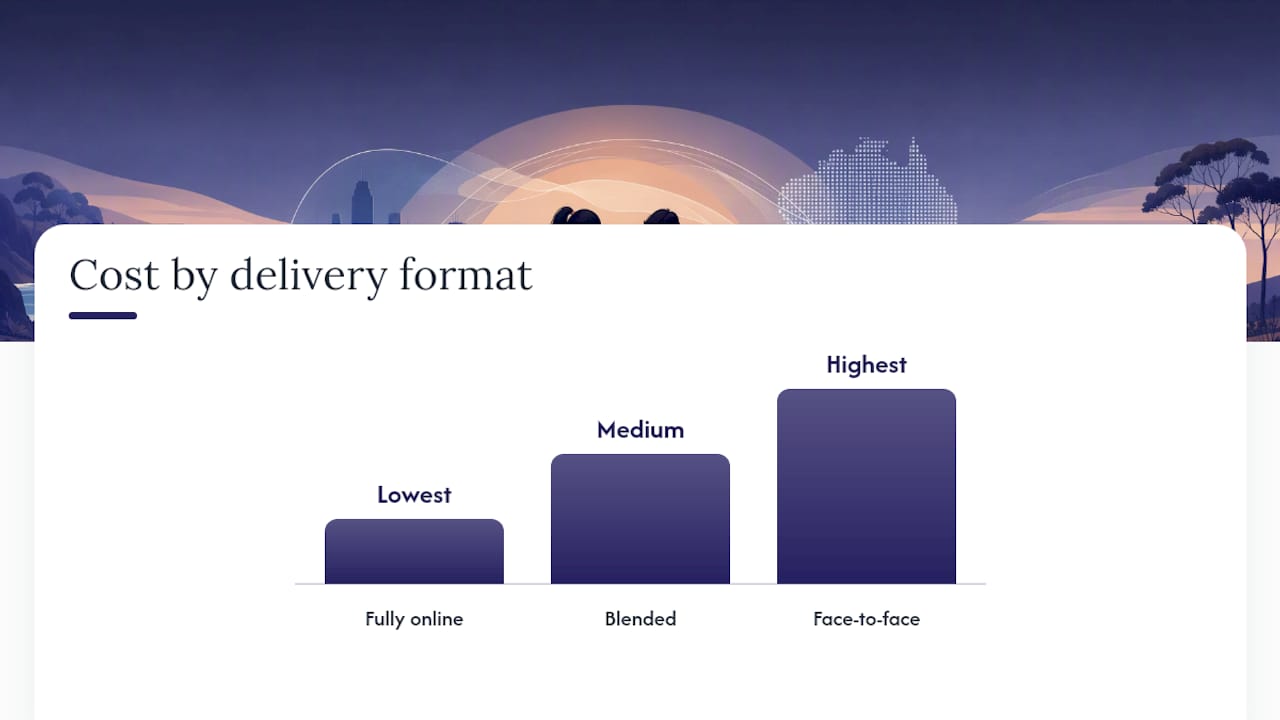
Delivery format is the single biggest lever. A fully online course (theory only, no practical assessment) will always be cheapest, but it won’t satisfy units like HLTAID011 or HLTAID009, which require hands-on CPR assessment. Blended delivery, where you complete theory online then attend a shorter practical session, usually lands in the middle. Full face-to-face training costs the most because it demands a trainer’s time for the whole session.
Location matters too. Remote and regional bookings, particularly for mine sites and isolated worksites, often carry a travel surcharge to cover the trainer’s time and cost getting there. A few other factors shape the final number:
Group size — group and corporate bookings usually cost less per head than individual public course places.
Trainer experience — trainers with genuine clinical or industry backgrounds tend to sit at the higher end of the fee range, and that experience shows in the quality of the session.
Consumables — manikins, face shields, and other CPR training equipment factor into the base price, whether you notice them or not.
Cancellation policy — some providers charge a rebooking fee if you cancel late, so check the fine print before you pay.
Pro Tip: Ask any provider quoting a flat fee whether that price includes travel for on-site delivery. Remote-site surcharges are common and rarely advertised upfront.
How to compare first aid course offers properly
Before you book, run through this checklist. It takes five minutes and can save you from paying for a certificate that doesn’t hold up.
Confirm the exact unit code you need (HLTAID011, HLTAID009, HLTAID012, or HLTAID013) against what your employer or regulator has asked for.
Check the provider’s RTO listing on Training to confirm they’re actually registered to deliver that unit.
Confirm your result will be recorded against your USI. If you don’t have one yet, you can create your USI in a few minutes before the course starts.
Ask how assessment works. A legitimate course includes a practical CPR component and a knowledge check, not just attendance.
Ask about class size and trainer currency. Smaller classes mean more hands-on time per person.
Watch for red flags: no RTO listed, contact hours well under the standard for that unit, or vague language about “certificates of attendance” rather than nationally recognised outcomes.
Ways to reduce your first aid course cost
Saving money on certification doesn’t have to mean cutting corners. A few legitimate discounts show up across Australian providers regularly:
Student and pensioner concessions — often around 5% off the full fee, as seen in Queensland’s public course fee schedule.
Online booking discounts — booking and paying online instead of over the phone can shave a further 10% off in some public course schedules.
Group and employer bookings — the more people you book together, the lower the per-person rate tends to fall.
Public course subsidies — some states run subsidised public courses that undercut private market rates, worth checking before you default to the first provider you find.
Whatever discount you chase, don’t let price be the only factor. Confirm the certificate is genuinely tied to a nationally recognised unit before you hand over payment.
How Prime First Aid and Training handles cost and compliance
First aid and CPR training courses are delivered across on-site, mobile, and online formats, with course content tailored to the industry booking it. Certificates are typically issued promptly on completion, so teams aren’t left waiting on paperwork before they’re back on the job.
Pricing generally reflects factors such as group size, with group bookings receiving better per-head rates than individual enrolments, and remote or on-site delivery factoring in travel time rather than as a hidden add-on. Courses should be matched to the right unit code for the workplace to ensure businesses pay for appropriate content and meet compliance requirements.
What this cost guide gets right that most others miss
Most cost guides treat first aid training as a single product with one price. It isn’t. HLTAID009 and HLTAID011 solve different problems, and quoting a single “average price” across both does readers a disservice. The real skill in comparing providers isn’t finding the cheapest number. It’s matching the unit code to what you actually need, then judging price against that.
The conventional advice to “shop around for the best price” misses the bigger risk: a certificate that isn’t tied to a real RTO registration or doesn’t include practical assessment. That’s not a bargain, it’s a liability waiting to surface at the worst possible time, whether that’s a workplace audit or an actual emergency.
If you take one thing from this guide, prioritise verification over price. Check the RTO listing, confirm the USI recording, and only then compare fees. A slightly higher price for a properly delivered, fully assessed course is rarely the expensive option once you account for what a rejected certificate actually costs you.
— Vapour
Book your first aid course with Primetraining today
This provider offers an alternative to public course waitlists or unverified online-only providers. They offer HLTAID011 certificates and group bookings for various sites, delivering on-site, mobile, and online training with certificates typically issued promptly on completion, avoiding lengthy waits for paperwork.
If your team needs Provide First Aid (HLTAID011) or a standalone CPR course (HLTAID009), browse the full range of accredited courses to compare units and formats. Ready to lock in a date? Book online now and get your team certified without the runaround.
Sources
Recommended
Comments