
Australian PCBUs: How Many First Aiders at Work, 1:25 and 1:10 Guides

As a PCBU, you must provide adequate first aid equipment, facilities and trained people, at all times, for everyone at your workplace. The model Code of Practice gives starting ratios of one first aider for every several workers at low-risk sites, a higher proportion for high-risk sites, and an even higher proportion for remote high-risk sites. Treat those numbers as a planning guide, not a final answer. Your first move should always be a site-specific risk assessment.
TL;DR:
First aid staffing ratios should be based on a site-specific risk assessment that considers hazards, workforce composition, shifts, and remoteness.
All workplaces must maintain current, nationally recognized first aid qualifications, with annual CPR refreshers and triannual full first aid renewals to ensure compliance.
Adequate first aid involves having tailored equipment, accessible facilities, trained personnel, and ongoing worker consultation, with regular audits and updates.
Emergency procedures and records must be clear, translated if needed, and regularly reviewed to ensure immediate response and legal compliance.
The primary legal responsibility for a sufficient first aid system lies with the PCBU, who must regularly reassess and adapt arrangements to changing site conditions.
Table of Contents
What does ‘adequate’ first aid mean under WHS law?
The Work Health and Safety Act and its supporting regulations don’t hand you a fixed formula. Instead, they place a duty on the PCBU to ensure first aid provision is “adequate” for the specific workplace, and that word does a lot of heavy lifting. Adequate depends on your headcount, the hazards you run, your shift patterns, and how far you sit from emergency services.
A single-storey office with 15 staff on a nine-to-five roster has very different needs to a 24-hour manufacturing plant running three shifts. SafeWork NSW frames the duty around four practical elements you need in place:
Enough first aid equipment for the injuries your work is likely to cause
Facilities that are accessible when someone needs them, including after hours
Trained personnel or a documented arrangement for access to trained help
Ongoing consultation with workers about what’s actually needed
Inspectors and auditors look for evidence, not intentions. A dated risk assessment, a training register, and minutes from a consultation with your health and safety representative all count as proof you’ve done the work, rather than assumed it.
How many first aiders do you actually need?
Work through this in order, and you’ll land on a defensible number rather than a guess.
Identify the hazards. Machinery, chemicals, heights, heat, isolation, driving. Each hazard type changes your risk category.
Count the people present, including contractors, visitors and casual staff, not just your permanent headcount.
Assess remoteness and response time. How long would an ambulance take to reach you? Ten minutes is a different problem to ninety.
Account for shifts and rosters. A first aider who clocks off at 3pm is no help to a night shift crew.
Note any special medical needs in your workforce, such as staff with allergies, asthma, or chronic conditions requiring rapid response.
Run the numbers against the Code’s ratios and the picture gets practical fast. A 120-person low-risk warehouse sits comfortably at two or three first aiders across the site. A 40-person high-risk construction crew needs at least two, given the 1:25 ratio, and probably more once you factor in rostering. A ten-person crew on a remote Pilbara site falls under the 1:10 remote high-risk guide, meaning nearly every worker on shift may need training, or you need a dedicated, competent first aider on every roster.
When having a dedicated first aider present at all times is genuinely impractical, look at shared arrangements between neighbouring worksites, or contracted paramedical services for high-risk remote operations.
Pro Tip: Set calendar triggers for reassessment, not just annual reviews. New machinery, a roster change, or a new site expansion should each prompt a fresh look at your first aider numbers, because your last assessment stops being valid the moment your risk profile shifts.
What training and qualifications do first aiders need?
Every workplace first aider should hold a nationally recognised qualification, most commonly a Statement of Attainment in Provide First Aid (HLTAID011). That unit covers CPR, basic wound management, and response to common workplace emergencies, and it’s the baseline most SafeWork regulators expect to see on file.
High-risk and remote workplaces need more. Sites without quick access to emergency services should consider Provide First Aid in Remote or Isolated Situations, while workplaces running complex machinery, hazardous chemicals or higher patient loads should look at Provide Advanced First Aid.
Currency matters as much as the initial qualification:
CPR skills need refreshing every year
Full first aid units renew every three years, per Safe Work Australia’s model Code
Workplaces with anaphylaxis or asthma risks should run targeted refreshers between full renewals
A one-year gap in CPR currency is the most common compliance failure regulators find during audits, largely because businesses track the three-year renewal but forget the annual CPR requirement sits on a separate clock. Keep a training register with copies of Statements of Attainment and automated expiry alerts, and you’ll never be caught out.
What first aid equipment and facilities do you need to provide?
Every workplace needs at least one accessible first aid kit, tailored to the injuries your work is likely to cause rather than a generic off-the-shelf box. An office kit looks different to a workshop kit.
Wound care items, resuscitation face shields, gloves and saline solution as a baseline
Kits placed near high-risk tasks, not locked away in a manager’s office
A kit in every vehicle for mobile or field-based workers
At least one kit per floor in multi-storey buildings
Larger or higher-risk workplaces need a dedicated first aid room, generally triggered by workforce size, injury severity potential, or distance from a hospital. SafeWork SA recommends these rooms include a bed, sink, and clear signage, positioned for easy stretcher access.
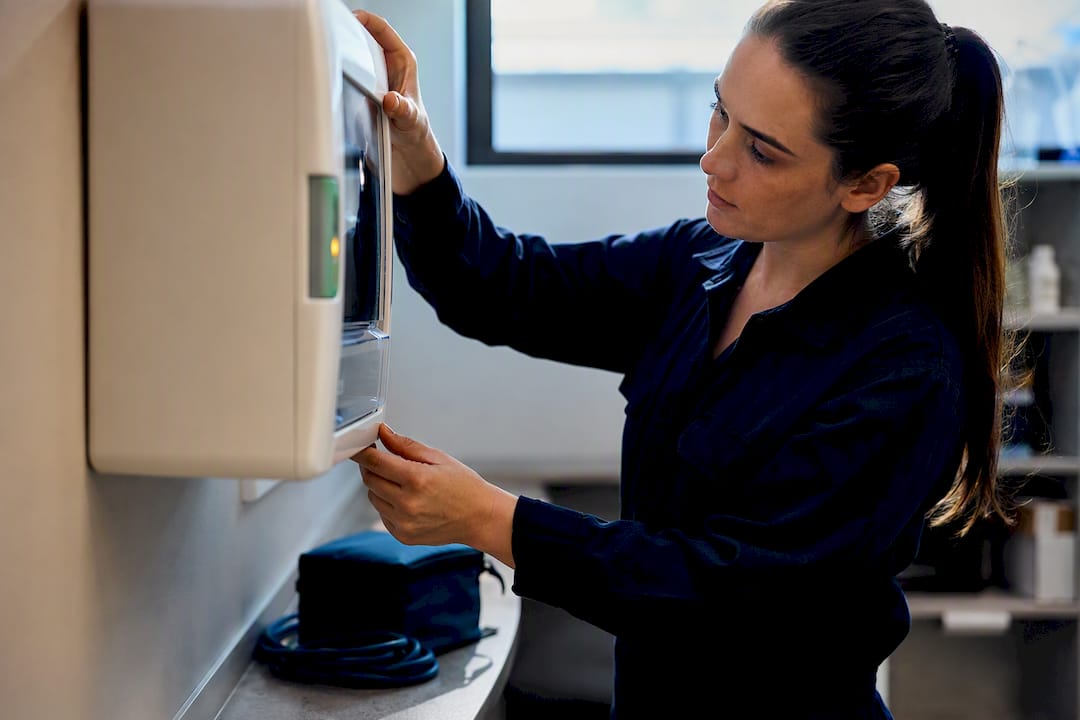
Automated External Defibrillators aren’t mandatory everywhere, but they’re strongly recommended for larger workplaces, older workforces, or sites with known cardiac risk factors. If you install one, register it and schedule regular maintenance checks so the battery and pads are never out of date when you need them.
How should you handle first aid procedures and record-keeping?
Written procedures turn a good kit into an effective response. At minimum, your procedures need to cover:
Who to call first, internally and externally, and when to escalate to emergency services
How incidents get logged immediately after treatment, including time, treatment given and outcome
How that record gets handed to emergency responders and stored for your own compliance file
Make sure every worker knows where kits are, who your first aiders are, and how to raise the alarm, through induction, signage, and team meetings. On multilingual sites, translate key signage and procedures rather than assuming everyone reads English fluently. Employers managing workers with disability or attention-related conditions should also consider reasonable workplace adjustments as part of a genuinely inclusive safety response.
Check kits after every use and audit them in full at least annually, per SafeWork NSW guidance. Any known medical conditions you hold on file need to stay confidential, shared with first aiders only with the worker’s consent.
Who is legally liable if first aid falls short?
The PCBU carries the primary legal responsibility for an adequate first aid system, and that duty can’t be delegated away by pointing to an individual employee. SafeWork NSW notes courts have found businesses in breach of duty where first aid arrangements were absent or clearly inadequate for the risks present.
First aid allowances aren’t automatic; they depend on your applicable Modern Award and whether the role requires the worker to act as a designated first aider
Document role expectations clearly if you’re asking someone to hold first aid responsibilities
Check your Award before assuming an allowance is or isn’t owed, and review your workers’ compensation insurance to confirm first aid duties are covered
Quick checklist and how Primetraining supports you
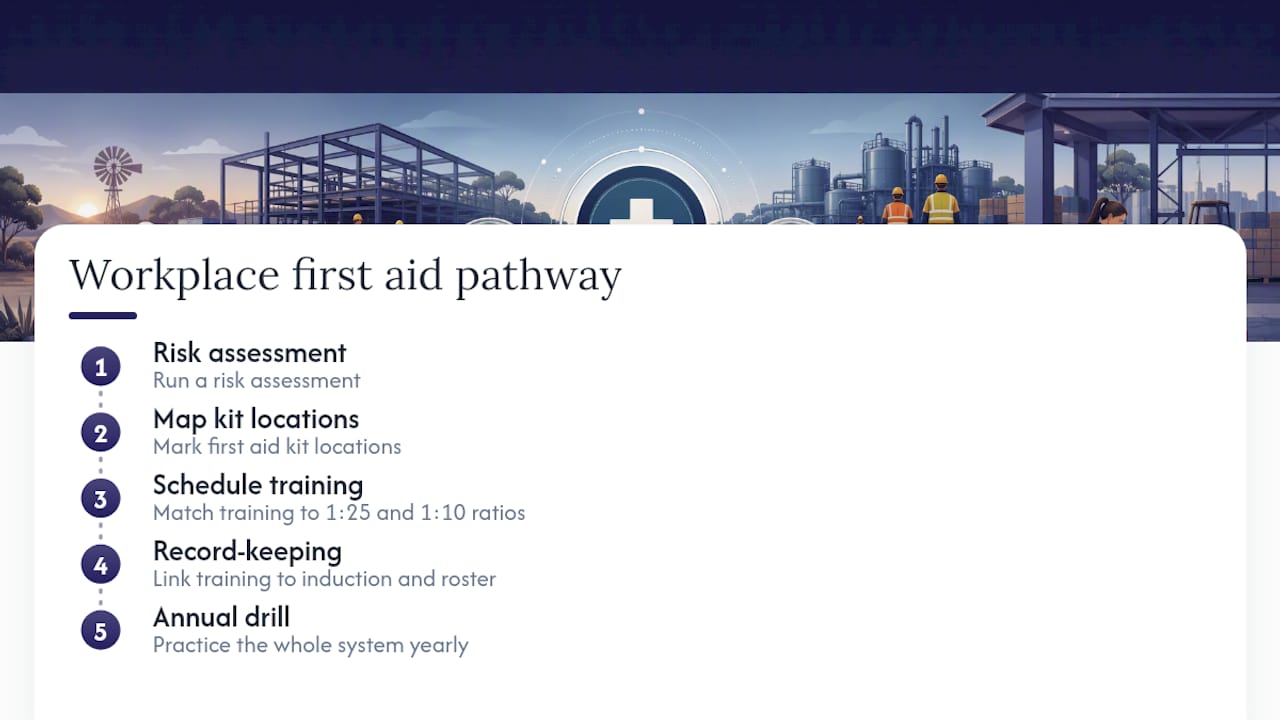
Run a risk assessment, map your kit locations, schedule training against the ratios above, keep your records current, and run an annual drill. That’s the whole system in five steps.
Tailored, on-site training matters most for high-risk and remote workplaces, where scenario-based practice beats a generic online course. Primetraining delivers courses across the Provide First Aid and remote and isolated site units, with mobile delivery for Pilbara mine sites and fast certificate turnaround.
Pro Tip: Link every training completion directly to your induction checklist and roster system, so a lapsed certificate flags itself before someone’s rostered onto a shift without cover.
First aid is a living system, not a one-off tick
Too many businesses treat their first aid arrangement as a document filed once and forgotten. It isn’t. Hazards shift when you bring in new machinery, expand a site, or change a roster, and an assessment written for last year’s workforce doesn’t protect this year’s.
The gap I see most often isn’t a missing kit. It’s a training register nobody’s checked in eighteen months, or a remote site still running on an ordinary first aid unit that was never upgraded for isolation risk. Run your drills. Reassess on triggers, not just anniversaries.
— Vapour
Book training that fits how your business actually operates
Generic online certificates tick a box for low-risk offices, but they won’t prepare a crew for a genuine emergency on a remote site or a busy industrial floor. Primetraining is the practical alternative for Australian businesses that need training matched to real hazards, not a template. We deliver on-site and mobile courses tailored to your workplace, run scenario-based instruction with trainers who’ve worked the industries they teach, and issue certificates fast so your roster isn’t left short.
Whether you’re arranging foundational training for an office team or building a remote-site first aid capability for a mining crew, browse our full range of courses or head straight to book a session online and get your team compliant without the wait.
Sources
This article is general information, not a substitute for advice from a qualified doctor. Consult a qualified healthcare professional about your own circumstances before acting on anything here.
Recommended
Comments