
Before First Use: P2 Mask Fit Testing for Australian Employers

Yes. Any worker required to wear a P2 or other tight-fitting respirator must undergo formal fit testing under Australian WHS guidance and AS/NZS 1715. Testing happens before first use, regularly, and whenever facial features change or a new mask model is issued. If your workforce wears P2 masks and hasn’t been through this process, the next step is simple: book an accredited tester or set up a properly accredited in-house program before anyone straps on a respirator again.
TL;DR:
Fit testing is mandatory for any worker who must wear a tight-fitting respirator, regardless of industry or job title, to ensure effective protection.
Quantitative testing provides an objective measurement of mask seal efficacy, while qualitative testing relies on individual senses and can be unreliable for mask approval.
Testing must be repeated before first use of a new mask, annually, and whenever facial features or mask models change, with proper documentation required for compliance.
Facial hair and improper fit checks compromise respirator effectiveness daily; workers must be clean-shaven and perform fit checks each time they wear the mask.
Accredited, on-site or mobile fit testing services ensure proper procedures, equipment calibration, and record-keeping, reducing risks of false passes and regulatory issues.
Table of Contents
Who needs P2 mask fit testing in Australia?
If a worker’s role requires a tight-fitting respirator to protect against airborne hazards, fit testing isn’t optional. This covers a broader slice of the workforce than most safety officers assume.
Construction and demolition workers exposed to respirable crystalline silica
Mining and mineral processing staff, particularly in the Pilbara and other dust-heavy operations
Healthcare and aged care workers using P2 respirators for infection control
Tradespeople handling hazardous dusts, fibres, or fumes (welders, sprayers, insulation installers)
Laboratory and pathology staff working with biological or chemical aerosols
Emergency responders and fire crews using tight-fitting RPE
The requirement applies to any worker directed to wear a tight-fitting respirator, regardless of industry title. Loose-fitting hoods and positive-pressure headtops, such as powered air-purifying respirators (PAPR), sit outside this requirement because they don’t rely on a facial seal to function.
When and how often should fit testing happen?
Fit testing isn’t a one-off box to tick. WorkSafe WA’s guidance sets out clear intervals that employers need to build into their safety calendar, not just remember when an audit looms.
Before first use of any new respirator make, model, or size, fit testing is required before that worker relies on it for protection.
At least annually, even if nothing about the worker or the mask has changed on the surface.
Whenever facial features change significantly, such as noticeable weight fluctuation, new dental work, or facial scarring.
Whenever a different model is issued, since fit factors vary between brands and even between sizes of the same product.
Every test needs a written record, and the worker should walk away with a fit test card showing the result, date, and mask details. Without that paperwork, you can’t prove compliance if WorkSafe comes knocking.
Qualitative vs quantitative fit testing: which suits P2 masks?
Two testing methods satisfy AS/NZS 1715, and they work very differently. Qualitative testing relies on the wearer’s own senses: a test agent, usually bitter or sweet-tasting aerosol, is introduced into a hood while the worker performs exercises like talking and bending. If they can’t taste or smell it, the mask passes.
Quantitative testing swaps subjective judgement for a number. A probe fitted into the mask measures particle counts inside versus outside the facepiece, producing a numerical fit factor.
The limitation that catches employers out: qualitative testing is only valid for half-face respirators, and it can produce a false pass if the wearer simply can’t detect the test agent. Some workers have a genuinely poor sense of taste or smell and will “pass” a test that tells you nothing about the actual seal.
Where it’s reasonably practicable, quantitative testing gives you objective, defensible data using devices like PortaCount-style particle counters, widely used by Australian providers for this exact reason. It costs more and needs a properly trained operator, but when a regulator asks for proof, a fit factor number beats “they said they couldn’t taste it.”
Qualitative: cheaper, faster, subjective, half-face respirators only
Quantitative: objective, defensible, works on half and full-face masks, requires calibrated equipment and a competent operator
What actually happens during a P2 fit test?
A properly run fit test follows a consistent sequence, whether it’s qualitative or quantitative. Here’s what to expect on the day.
Pre-test screening. The tester confirms the worker is medically fit to wear a respirator and checks for facial hair at the sealing surface, which invalidates results before testing even starts.
Explanation and consent. The tester walks through what will happen so nerves don’t affect the result, particularly for anyone claustrophobic about hoods or masks.
Donning and user seal check. The worker fits the mask themselves and performs a basic positive or negative pressure check.
The formal test. For qualitative tests, this means a series of exercises inside a hood with the test agent present. For quantitative tests, a probe measures particle penetration while the worker moves through the same exercise sequence.
Result interpretation. A pass means the mask, in that size and model, seals adequately for that individual. A fail means trying a different size or brand, not just testing again in the same mask.
Documentation. The tester issues a written record and fit test card noting the model, size, date, method, and result.
Pro Tip: Don’t assume the biggest name in respirators fits every face. Fit test failure rates on first attempts can run high in certain cohorts, so budget time and stock for trialling two or three models per worker rather than ordering one style in bulk.
Fit checks and facial hair: what changes daily use
A fit check and a fit test are not the same thing, and mixing them up is one of the most common compliance gaps we see.
Positive pressure check: cover the exhalation valve, exhale gently, and feel for the mask bulging slightly without air leaking around the edges.
Negative pressure check: cover the intake area, inhale, and confirm the mask draws in against the face without air rushing in at the seal.
Do this every single time the respirator goes on, no exceptions.
Fit-checking never replaces the formal fit test. It confirms the mask is seated correctly on a given day; it says nothing about whether that model and size actually suits the worker’s face shape.
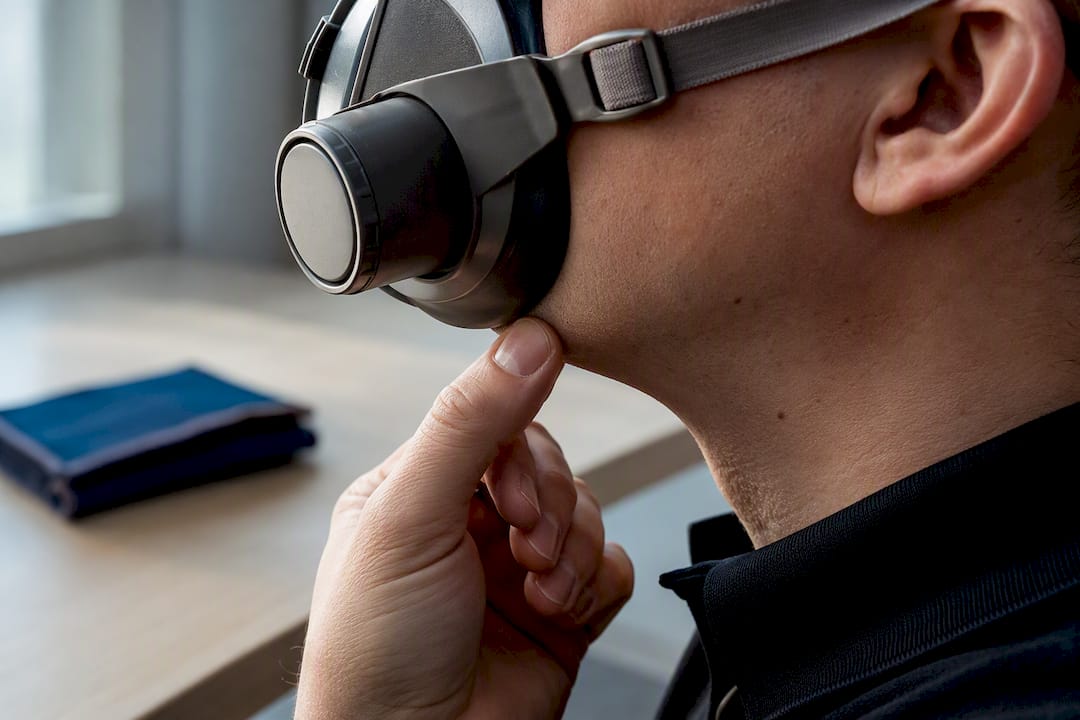
Facial hair rules are strict and non-negotiable: workers must be clean-shaven where the respirator seals against the skin. Even light stubble under the seal line breaks the fit and invalidates both the test and the day-to-day protection.
Employer responsibilities and recordkeeping
As a PCBU, the obligation runs deeper than handing out boxes of masks. You need to provide RPE suited to the actual hazard, arrange fit testing through a competent person, and weave that testing into a genuine respiratory protection program rather than treating it as a standalone tick.
Records to retain for every worker include:
Type of test performed (qualitative or quantitative)
Make, model, and size of the respirator tested
Date of the test and the result
Name of the tester who conducted it
Confirmation that a fit test card was issued to the worker
Fit testing should sit inside a broader risk assessment. If your silica, dust, or fume exposure levels change, the RPE selection and testing frequency need reviewing alongside it. Training matters here too. Workers need to understand why the seal matters, how to do a daily fit check properly, and when to flag that a mask no longer feels right, whether that’s from weight change, a new filling, or simply a worn-out strap.
How accredited fit testing works, on-site or in-house
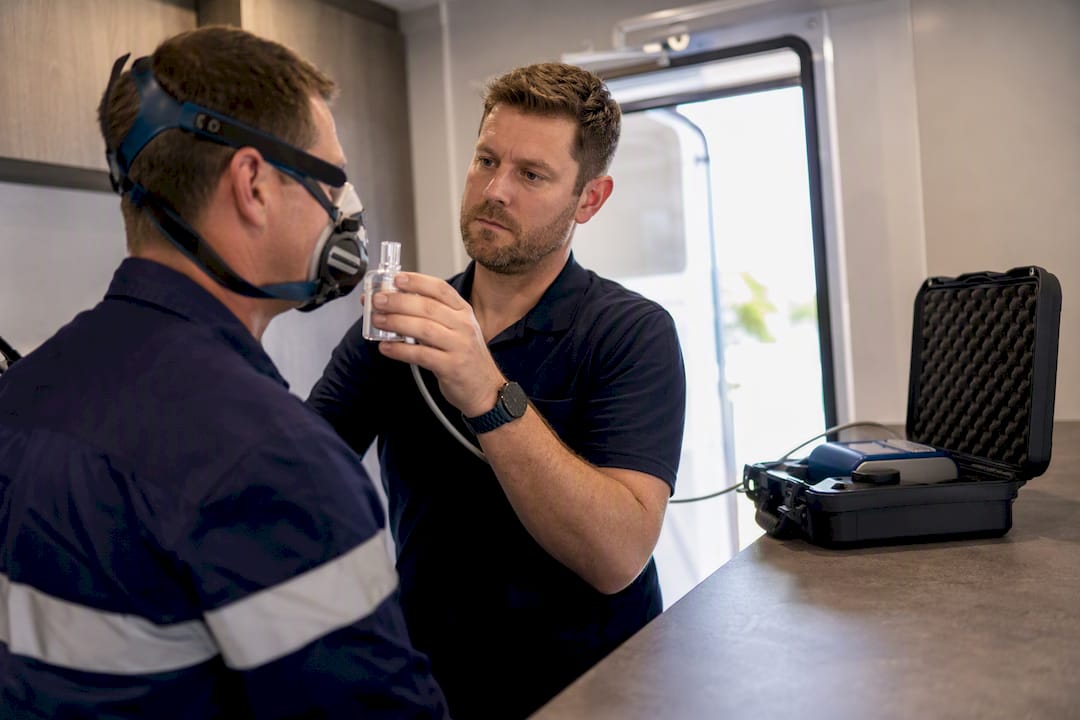
RESP-FIT is Australia’s national accreditation program for fit testers, and it’s the quickest way to confirm a provider actually knows what they’re doing. An accredited tester brings calibrated equipment, documented competency, and a record-keeping process that holds up under audit; that’s the baseline, not a bonus.
For remote or multi-site operations, mobile testing solves a real logistics headache. Rather than flying workers to a clinic, a tester travels to the site and works through your team in a single visit. Employers need to have ready: staff numbers, the tasks and hazards each worker faces, and site conditions like power access or noise that might affect testing.
Confirm quantitative capability, not just qualitative kits
Ask for evidence of RESP-FIT or equivalent accreditation
Check turnaround time for records and fit test cards
Pro Tip: If you’re running a mixed workforce across several respirator brands, ask your tester upfront whether they can quantitatively test full-face and half-face masks in the same visit. Switching providers between mask types wastes a day you don’t have.
A dedicated respirator fit testing service is available that addresses this kind of site logistics.
Why quantitative testing and good records matter more than the mask itself
Too many workplaces treat fit testing as a formality, something to get through rather than something to get right. That’s backwards. A qualitative pass on a worker who can’t smell the test agent gives you a signed piece of paper and nothing else, a false sense of security dressed up as compliance.
Quantitative testing costs more up front, but it’s the only method that gives you a number you can actually stand behind if something goes wrong. We’d rather see an employer trial three mask models to find one that produces a genuine fit factor than accept the first “pass” that comes out of a hood test.
Training matters just as much as the test itself. A worker who understands the difference between a proper seal and a leaky one will catch a bad fit on a Tuesday morning long before the next annual test rolls around. Having delivered mobile testing across remote Western Australian sites, we’ve seen how much difference a solid fit check habit makes between test cycles.
— Vapour
How Prime First Aid and Training handles your fit testing
Sorting fit testing for a remote crew usually means one of two headaches: flying workers out to a clinic, or trying to run testing in-house without proper accreditation. This can be solved by bringing the whole process to your site.
On-site and mobile respirator fit testing options tailored to various workforces exist, along with prompt issue of certificates and fit test cards to avoid delays. Testing services can also be combined with related compliance training, such as confined spaces and gas testing courses for crews managing multiple entry permits alongside respirator use.
To get started, book online or contact providers with your staff numbers, the tasks your team performs, and your preferred dates. They can assist in determining the right testing approach for your site.
Sources
Recommended
Comments