
Avoid Failed Fits: 4 Qualitative Fit Test Protocols for Testers

Four qualitative fit test (QLFT) methods carry regulatory acceptance: isoamyl acetate, saccharin solution aerosol, Bitrex (denatonium benzoate), and irritant smoke. Each relies on the wearer detecting a taste or smell challenge agent rather than a numerical seal measurement. QLFT is validated to a fit factor of about 100, which limits its use to half-mask respirators and filtering facepieces with an assigned protection factor of 10 or below. Below, we set out the full step-by-step protocol for each method.
TL;DR:
Qualitative fit tests are only suitable for respirators with an assigned protection factor of 10 or below, limiting their use to half-masks and filtering facepieces.
The four accepted challenge agents—isoamyl acetate, saccharin, Bitrex, and irritant smoke—each rely on different sensory pathways and have specific setup and safety considerations.
Proper equipment calibration, solution storage, and adherence to detailed protocols are essential to ensure valid results during fit testing procedures.
Screening for individual sensitivity and proper respirator fit is crucial before testing, especially to avoid false passes due to face or seal issues.
A professional fit-testing service offers calibrated equipment, consistent execution, and complete records, particularly important for remote work sites or high-volume testing needs.
Table of Contents
What is a qualitative fit test protocol and which methods count?
Step-by-step protocol and cautions: irritant smoke (stannic chloride)
Fit test exercises and timing (standard sequence and substitutions)
Pass/fail criteria and the limitations of qualitative testing
When to engage a professional fit-testing service and what to expect
Practitioner perspective: common pitfalls and avoidance tactics
Prime First Aid and Training: professional fit testing services
What is a qualitative fit test protocol and which methods count?
A qualitative fit test protocol is a pass/fail procedure that checks whether a tight-fitting respirator seals against the wearer’s face, using the wearer’s own senses as the detector instead of an instrument. The four accepted challenge agents each work through a different sensory pathway, and choosing between them usually comes down to the respirator class, the workplace exposure, and how sensitive your workforce is to a given agent.
Isoamyl acetate (IAA) produces a banana-like odour. It’s a solvent vapour rather than a true aerosol, so it needs a sealed test chamber or hood and works best with respirators fitted with organic vapour cartridges, since the wearer needs to smell any leakage past the seal.
Saccharin solution aerosol relies on taste. A nebulised saline solution containing saccharin is sprayed into a testing hood, and the wearer reports any sweet taste that gets through. It’s the gentlest of the four agents and suits people who find Bitrex’s bitterness hard to tolerate.
Bitrex (denatonium benzoate) is one of the most bitter substances known, and that’s precisely its value. Even a trace leak produces an unmistakable taste, which is why many test administrators prefer it. It follows the same nebuliser-and-hood setup as saccharin.
Irritant smoke (stannic chloride) triggers an involuntary cough or throat irritation reflex rather than a taste or smell judgement. OSHA permits it as an accepted protocol, though NIOSH flags caution around its irritant nature and the absence of a genuine sensitivity threshold. All four methods share one hard ceiling: suitability caps at APF 10, meaning they’re appropriate for half-masks and N95-style filtering facepieces used where airborne exposure sits below ten times the occupational exposure limit. Full-facepiece respirators or higher-hazard atmospheres call for quantitative fit testing (QNFT) instead.
Isoamyl acetate: odour-based, needs organic vapour cartridges, chamber setup required
Saccharin: taste-based, gentle, nebuliser and hood setup
Bitrex: taste-based, highly sensitive, same setup as saccharin
Irritant smoke: reflex-based, no sensitivity threshold, requires strict safety controls
Equipment, materials and calibration checklist
Running a compliant qualitative fit test session means assembling the right kit before a single subject walks in the door, and checking it works.
Testing enclosure: a purpose-built hood or booth that fully encloses the head and shoulders, with a viewing panel and an opening for the nebuliser hose.
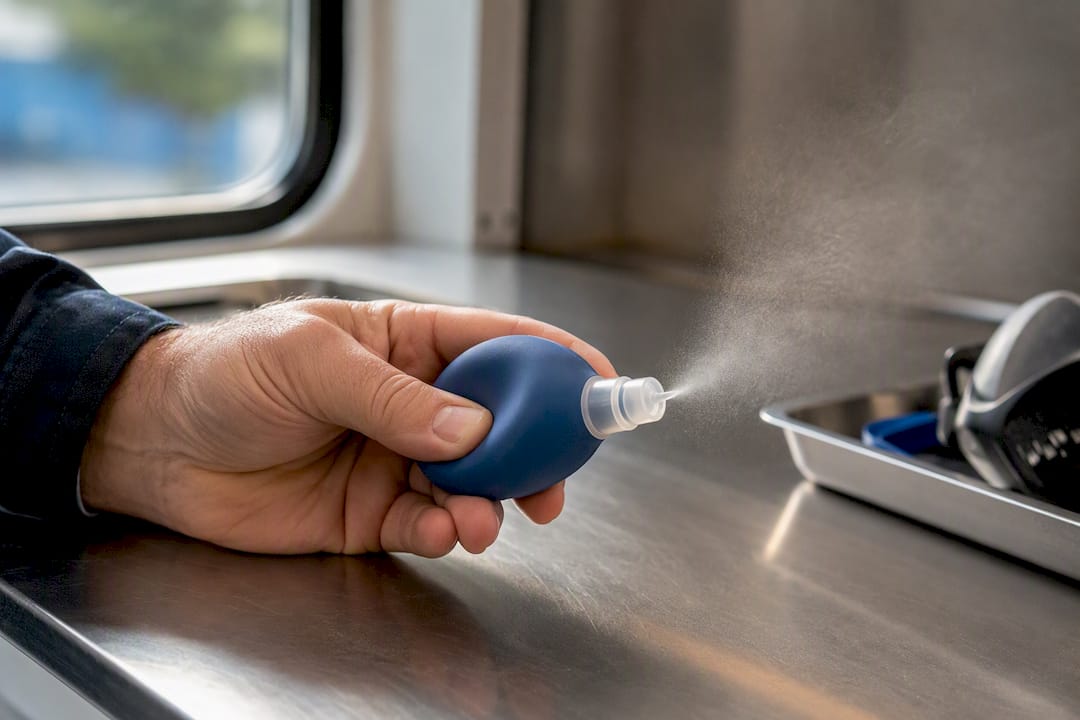
Nebuliser or atomiser: a squeeze-bulb nebuliser for saccharin and Bitrex; for IAA, a wick-and-chamber or tiered-paper arrangement rather than a nebuliser, since it’s a vapour, not an aerosol.
Test solutions: sensitivity screening solution and test solution for saccharin or Bitrex, prepared to the concentrations specified in the NIOSH standard test procedure; stock and dilute IAA solution for odour testing.
Measuring equipment: a syringe or calibrated dropper for solution volumes, a stopwatch for exercise timing, and spare nebuliser bulbs.
Documentation kit: fit test record forms, respirator model and size logs, and a means to capture sensitivity screening results per subject.
Solution shelf-life matters more than most administrators expect. Saccharin and Bitrex solutions degrade with heat and light exposure, and a solution left in a hot vehicle on a Pilbara job site for a week won’t perform the same as one mixed that morning. Store stock solutions in dark, sealed containers, note the mixing date on the label, and discard anything past its documented use-by window.
Nebuliser clogging is the single most common equipment failure in the field. A partially blocked nozzle delivers less aerosol than the sensitivity screening step assumed, which can produce a false pass. Evidence reviews of practical fit-testing setups consistently flag nebuliser maintenance as the difference between a defensible test and an invalid one.
Pro Tip: Squeeze the nebuliser bulb into open air before every single sensitivity screening and test run, even if it worked fine ten minutes ago. A five-second check catches a clog before it costs you a retest.
Pre-test checks and subject preparation
A fit test is only as good as the preparation behind it, and skipping these checks is where most invalid results originate.
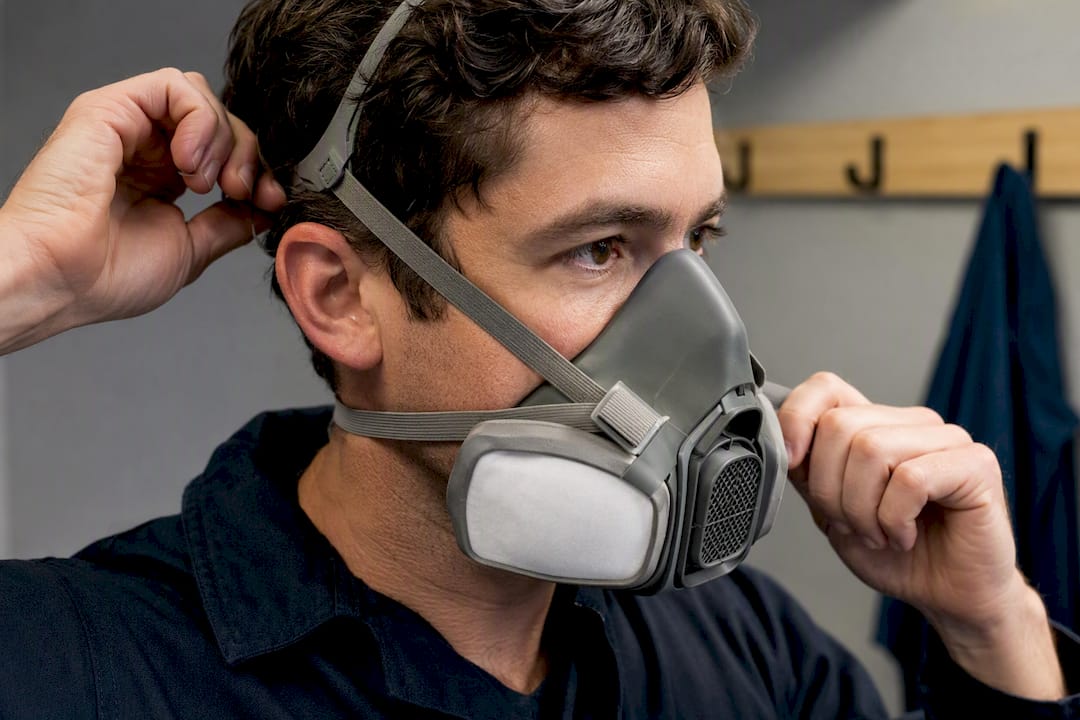
Start with a genuine user seal check on the respirator model the subject intends to wear for work, not a substitute. Have them don the mask, adjust straps, and wear it comfortably for at least five minutes before testing begins, since a respirator that feels fine for thirty seconds can shift or leak once someone’s jaw moves through a real range of motion.
Before the test proper, run a sensitivity screening. This confirms the subject can actually detect the challenge agent at a low concentration, without the respirator on. If a subject can’t detect saccharin or Bitrex at the screening concentration, don’t proceed to a full test using that agent, since a “pass” would be meaningless. Switch to a different agent or refer them to quantitative testing instead.
Certain conditions before testing will compromise sensitivity or seal reliability:
No eating, drinking (except water), chewing gum, or smoking for at least 15 minutes beforehand
No facial hair that crosses the respirator’s sealing surface
No cosmetics or facial creams that could interfere with seal contact
No known upper respiratory infection or nasal congestion on test day
Record every respirator model and size tried during the session, not just the one that ultimately passes. If a small half-mask fails on someone with a broader jawline and a medium passes cleanly, that data belongs in the file. It shows the process worked as intended, rather than looking like a single arbitrary pass.
Step-by-step protocol: isoamyl acetate (IAA)
The IAA protocol depends on smell, which makes solution preparation and chamber setup the two steps that most often go wrong.
Prepare stock solution: mix isoamyl acetate to the concentration specified in the NIOSH STP, which also details wick volumes and dilution ratios for the sensitivity and test stages.
Screen sensitivity: outside the chamber, have the subject smell a low-concentration sample. If they can’t detect it, IAA isn’t a valid agent for that person.
Set up the chamber: place saturated wicks or tiered paper strips in the test enclosure and allow several minutes for the vapour concentration to equalise before the subject enters wearing the respirator.
Enter and equalise: the subject enters the chamber wearing the respirator that has passed a user seal check, and remains for a short settling period, commonly around eight minutes across the standard exercise sequence, per STP guidance.
Run exercises: proceed through the standard exercise sequence, replenishing the vapour source if concentration appears to drop.
Handle detection immediately: any odour detected at any point is an immediate fail. Note the exercise during which it occurred and remove the subject from the chamber.
Document: record sensitivity result, respirator model/size, exercise sequence completed, and pass/fail outcome.
Step-by-step protocol: saccharin solution aerosol
Saccharin’s gentleness makes it a common first choice, and the protocol turns on getting the sensitivity threshold right.
Prepare the sensitivity solution and load it into the nebuliser.
Determine the squeeze threshold: standing outside the hood, without the respirator, squeeze the nebuliser bulb a set number of times and ask the subject to report when they first taste sweetness. Record this squeeze count.
Move to the test solution and hood: the subject dons the respirator, undergoes a user seal check, then enters the testing hood.
Aerosolise the test solution: deliver an initial higher-concentration burst into the hood, then replenish at roughly half the sensitivity squeeze count every 30 seconds throughout testing.
Instruct the subject to breathe normally through the mouth, then deeply, as exercises proceed.
Run the standard exercise sequence while maintaining the replenishment cadence.
Record outcomes: any detected sweetness at any point is a fail; note which exercise triggered it, and log the sensitivity squeeze count for the subject’s file.
Saccharin works well as a default agent for mixed workforces, since its mild taste profile rarely causes the reflexive gagging that irritant smoke can, and it doesn’t require the chamber setup IAA needs.
Step-by-step protocol: Bitrex (denatonium benzoate)
Bitrex’s extreme bitterness makes it one of the most decisive agents to test with, and the protocol closely mirrors saccharin’s structure.
Prepare the Bitrex sensitivity solution and load the nebuliser.
Screen sensitivity outside the hood: squeeze the bulb and ask the subject to report the first detectable bitterness. Record the exact squeeze count, since this varies noticeably between individuals.
Fit and seal-check the respirator, then move the subject into the testing hood.
Deliver the test aerosol: an initial concentrated burst, followed by replenishment at roughly half the sensitivity squeeze count every 30 seconds across the seven exercises.
Watch for a clear fail signal: Bitrex leaks tend to produce an immediate, unmistakable bitter response, unlike some borderline saccharin detections, which makes ambiguous fails less common with this agent.
Stop testing on detection: remove the subject, note the exercise and squeeze count at failure.
Record and retain: log sensitivity threshold, test squeeze schedule, and outcome per exercise for the compliance file.
Bitrex suits workplaces that want fewer borderline calls. Its sharp, unambiguous flavour cuts down on the “maybe I tasted something” grey zone that occasionally muddies saccharin results.
Step-by-step protocol and cautions: irritant smoke (stannic chloride)
Irritant smoke works differently to the other three agents, and that difference carries real safety implications.
No true sensitivity threshold exists. Unlike saccharin or Bitrex, you cannot screen a subject’s ability to detect irritant smoke at a sub-irritating concentration because the whole mechanism is an involuntary cough or throat irritation reflex, not graded taste detection.
The test is delivered in short puffs directed near the respirator’s sealing surface while the subject keeps their eyes closed, since stannic chloride smoke is a genuine eye and airway irritant.
OSHA lists irritant smoke as an accepted protocol, but NIOSH guidance flags reservations about its harsher exposure profile compared with taste-based agents.
Exposure must stay brief. A short puff near the seal, not a sustained cloud, is the correct application, and administrators should ventilate the test area promptly afterward.
Reserve it for cases where taste-based agents aren’t viable, such as subjects with impaired taste or smell, and consider quantitative fit testing instead if irritant smoke also proves unworkable for that individual.
Because irritant smoke skips the sensitivity screening step entirely, it offers less individualised assurance than saccharin or Bitrex. Many safety officers treat it as a backup agent rather than a first choice for that reason.
Fit test exercises and timing (standard sequence and substitutions)
Every qualitative method runs through the same exercise sequence, drawn from the OSHA-mandated protocol, with each exercise typically held for about one minute.
For aerosol agents, replenishment continues on its own schedule throughout this exercise block, roughly every 30 seconds at half the sensitivity squeeze count, regardless of which specific exercise the subject is performing. For IAA, chamber concentration is expected to hold steady across the block without exercise-by-exercise topping up.
The bending substitution matters more than it looks. Workplaces with limited floor space, or subjects with mobility restrictions, can swap “bending at the waist” for jogging in place without compromising the exercise’s purpose, which is to introduce physical exertion and jaw movement that might disturb the seal. Watch subjects during exertion exercises for signs of genuine breathlessness, particularly if testing is happening in a hot mobile unit or a site donga rather than a climate-controlled room, since exertion combined with heat changes how people breathe and can affect detection sensitivity.
Pass/fail criteria and the limitations of qualitative testing
Pass/fail is binary and immediate: no detection of the challenge agent at any point across the exercise sequence means a pass; any detection at any point means an immediate fail. There’s no partial credit and no averaging across exercises.
When detection occurs, stop the test straight away rather than finishing the sequence. Note which exercise triggered it, since a fail during head turning versus a fail during normal breathing points to different fitting problems.
The limitation every safety officer needs to internalise is this: QLFT is validated only to a fit factor of about 100, which caps its use at respirators with an assigned protection factor of 10 or below, typically half-masks and filtering facepieces. If your workplace exposure demands a higher APF, whether because of a more hazardous contaminant or a full-facepiece respirator, qualitative testing isn’t the right tool, and quantitative fit testing (QNFT) becomes necessary instead.
Common causes of a genuine fail, and the usual fix:
Wrong size or model — try a different size within the same range, or switch models entirely
Facial hair crossing the seal — requires shaving or a switch to a powered air-purifying respirator
Strap tension too loose or uneven — refit and re-test rather than assuming the model itself has failed
Deep facial scarring or unusual bone structure — may require a specialised respirator model or a move to quantitative testing
Pro Tip: A single fail on one model doesn’t mean the subject can’t be fitted. Keep at least two or three respirator models on hand during a testing session, since jaw and cheek shape vary enormously and a second model often passes cleanly where the first didn’t.
Who can conduct fit tests, frequency and recordkeeping
Test administrators need genuine competence, not just access to a kit. That means training in the specific protocol being used, hands-on practice running sensitivity screenings, and enough experience to recognise a borderline detection versus a confident one.
Administrator responsibility: the person conducting the test should be trained in the exact QLFT method used and familiar with the respirator models being fitted, since fitting advice (adjusting straps, trying an alternate size) is part of a competent test, not a separate step.
Testing frequency: fit testing is required when a worker is first assigned a respirator, then at least annually after that, and again whenever there’s a facial change (significant weight change, dental work, scarring, or new facial hair) or a switch to a different respirator make or model.
Record retention: keep a record for each test covering the subject’s name, date, respirator make/model/size tested, method used, sensitivity screening result, and pass/fail outcome, retained per your jurisdiction’s recordkeeping requirements. Institutional protocols like UNSW’s HS926 show how these records typically fold into broader workplace fitness-for-duty processes.
Documentation that only records the final pass, without the model tried first and why it failed, doesn’t hold up well if a regulator or an insurer ever asks for the full history. Complete records protect both the worker and the business.
When to engage a professional fit-testing service and what to expect
Running qualitative fit tests properly, with calibrated kit, correctly prepared solutions, and a trained administrator, takes real time to set up in-house. That’s the gap a professional service closes.
Consistent execution across every subject, since a dedicated tester who runs fit tests regularly catches sensitivity screening anomalies and nebuliser problems that an occasional in-house tester might miss.
Calibrated, well-maintained equipment, including fresh solutions and checked nebulisers, arriving ready to test rather than assembled on the day.
Immediate, audit-ready records handed over on completion, rather than a scramble to reconstruct who was tested on what date with which respirator.
Less operational disruption, particularly for remote and industrial sites where pulling workers off-site for testing costs real production time.
For businesses running crews across mine sites, construction projects, or healthcare facilities in remote locations, mobile delivery matters as much as the protocol itself. A tester who can come to the Pilbara job site, run the full sequence on-shift, and hand over records before the crew changes over solves a logistics problem that no amount of protocol knowledge fixes on its own. The same logic extends to related workplace testing, including hearing protective device fit checks, where consistent, on-site delivery matters just as much as the technical procedure.
Practitioner perspective: common pitfalls and avoidance tactics
Most invalid qualitative fit tests trace back to the same handful of mistakes. Olfactory fatigue is the quiet one: a tester whose run six IAA sessions before lunch stops noticing their own baseline smell drift, and subjects who’ve just had a strong coffee or chewing gum can genuinely fail to detect an agent they’d pick up easily on a clean palate. Rushing the sensitivity threshold is the other repeat offender. Skip a proper squeeze-count baseline and you’ll get a “pass” that means nothing.
One pattern shows up often enough to name: a worker fails repeatedly on the same half-mask model, and the fix every time turns out to be trying a genuinely different size or brand rather than re-testing the identical respirator and hoping for a different result. Hood sizing matters too. A hood that sits loose around the shoulders lets ambient air dilute the test concentration and can mask a real leak.
— Vapour
Prime First Aid and Training: professional fit testing services
Running your own qualitative fit test protocol in-house means someone on your team owns solution prep, nebuliser maintenance, sensitivity screening, and audit-ready recordkeeping, on top of everything else on their plate. Professional fit testing services can deliver that whole process on-site or via mobile testing units, with certificates and records issued promptly on completion rather than weeks later.
When booking a session, you can expect calibrated equipment, experienced trainers, and a protocol based on the recognised OSHA exercise sequence rather than a shortcut version. Fit testing visits can be tailored around the workforce, whether a single office fitting or a full crew change at a remote site, with equipment brought to the location to minimise production downtime. Related workplace safety needs, like confined space and gas testing competencies, can often be booked alongside a fit-testing visit to cut down on separate site trips.
Ready to get your team compliant? Book a fit-testing session online or browse our full course catalogue to see what fits your workplace.
Sources
For primary-source verification, start with OSHA 29 CFR 1910.134 Appendix A, the mandatory procedure document underpinning every accepted QLFT method. NIOSH/CDC fit testing guidance explains the sensory detection principle behind qualitative methods, while the NIOSH standard test procedure for isoamyl acetate gives exact solution and chamber specifications. Read NSW Health’s evidence check for the fit-factor limitation, and consult sound hygiene practices around test equipment via a medical cleaning compliance guide where infection control intersects with shared testing gear.
FAQ
How Do You Conduct a Qualitative Fit Test?
You seal-check the respirator, run a sensitivity screening with the chosen agent, then have the subject wear the respirator through the standard seven-exercise sequence while a nebuliser or chamber delivers the test agent. Any detection of taste, smell, or irritation at any point during the sequence is an immediate fail, following the OSHA-mandated protocol.
How Long Does a Qualitative Fit Test Take?
A single qualitative fit test typically takes around 10 to 15 minutes once the subject is seal-checked and the sensitivity screening is complete, since the exercise sequence itself runs roughly seven to eight minutes at one minute per exercise. Preparation time, including solution mixing and hood setup, adds to the overall session length, which is why professional providers like Primetraining schedule multiple staff per visit rather than one at a time.
What Does a Qualitative Fit Test Tell You?
It tells you whether a specific respirator model and size seals adequately against that individual’s face, as a pass/fail outcome rather than a numerical score. It does not measure the actual degree of leakage, which is why QLFT is validated only to a fit factor of about 100 and isn’t suitable for high-hazard exposures needing a higher assigned protection factor.
Is the N95 Fit Test Qualitative or Quantitative?
N95 filtering facepieces can be fit-tested using either method, but qualitative testing is common and fully accepted for this respirator class because N95s sit within the APF ≤10 range that QLFT is validated for. Quantitative testing (QNFT) is also permitted and gives a numerical fit factor, but it isn’t required for N95s the way it is for higher-protection respirators.
Recommended
Comments